
The AccessDx PGx Profile:

PGx for Cardiology
PGx testing helps cardiology teams personalize treatment by identifying genetic differences that can affect how a patient metabolizes and responds to medications.
- Improves antiplatelet therapy selection
- Helps prevent serious cardiovascular complications or recurrent cardiac events
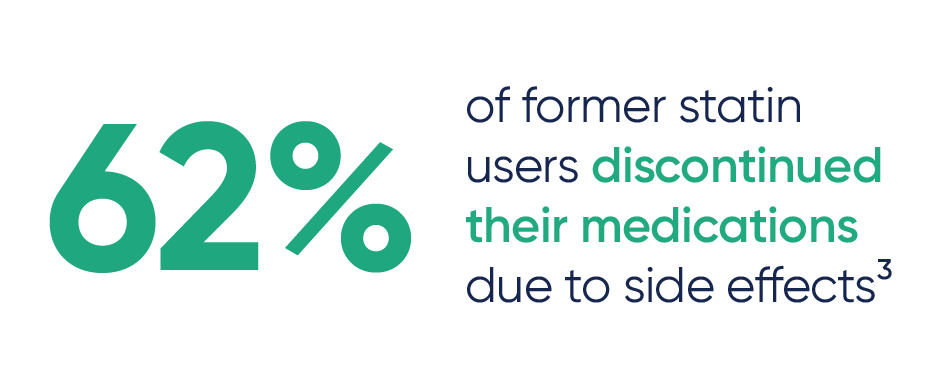
- Helps identify risk for statin intolerance
- Improves medication effectiveness
Fill out this form to learn more details about PGx use in cardiology practices.
Cardiology medications consistently rank among the top prescribed drug classes, and many carry actionable pharmacogenomic guidance that can enhance patient safety and treatment efficacy.2


Testing Offerings:
Medicine Classes Impacted:
Angiotensin II Receptor Bockers (ARBs)
Angiotensin-Converting Enzyme (ACE) Inhibitors
Antiarrhythmics
Beta-Blockers
Dyslipidemia: Cholesterol Absorption Inhibitor
Dyslipidemia: Fibrates
Dyslipidemia: HMG-CoA Reductase Inhibitors
Inotropic Agents
Loop Diuretics
Other Cardiac Drugs
PGx Use in Cardiology Resources:
- FDA Label for Metroprolol
- CPIC Guidelines for Metroprolol
- DPWG Guidelines for Metroprolol
- A comprehensive review and meta-analysis of risk factors for statin-induced myopathy
- Patient-Reported Reasons for Declining or Discontinuing Statin Therapy: Insights From the PALM Registry
- Statin treatment eUectiveness and the SLCO1B1*5 reduced function genotype: Long-term outcomes in women and men
- Prescriber Adoption of SLCO1B1 Genotype-Guided Simvastatin Clinical Decision Support in a Clinical Pharmacogenetics Program
- Effects of Delivering SLCO1B1 Pharmacogenetic Information in Randomized Trial and Observational Settings/a>
- American Heart Association: CYP2C19 Genetic Testing for Oral P2Y12 Inhibitor Therapy: A Scientific Statement From the American Heart Association
- Effect of Genotype-Guided Oral P2Y12 Inhibitor Selection vs Conventional Clopidogrel Therapy on Ischemic Outcomes After Percutaneous Coronary Intervention: The TAILOR-PCI Randomized Clinical Trial
- Effect of CYP2C19 Genotype on Ischemic Outcomes During Oral P2Y12 Inhibitor Therapy: A Meta-Analysis
- CYP2C19 Genotype-Guided Antiplatelet Therapy After Percutaneous Coronary Intervention in Diverse Clinical Settings
- CYP2C19 genotype and platelet aggregation test-guided dual antiplatelet therapy after off-pump coronary artery bypass grafting: A retrospective cohort study
- Factors affecting the development of adverse drug reactions to β-blockers in hospitalized cardiac patient population
- CYP2D6 Genetic Variation and Beta-Blocker Maintenance Dose in Patients with Heart Failure
- Genetic variation in the CYP2D6 gene is associated with a lower heart rate and blood pressure in beta-blocker users
- CYP2D6 polymorphism and its impact on the clinical response to metoprolol: A systematic review and meta-analysis
-
-
- Tang, Borui et al. “Genotype-Guided Antiplatelet Therapy Versus Standard Therapy for Patients with Coronary Artery Disease: An Updated Systematic Review and Meta-Analysis.” Journal of pharmacy & pharmaceutical sciences : a publication of the Canadian Society for Pharmaceutical Sciences, Societe canadienne des sciences pharmaceutiques vol. 25 (2022): 9-23. doi:10.18433/jpps32140
- Centers for Disease Control and Prevention. “Prescription Drug Use in the United States, 2015–2016.” NCHS Data Brief, no. 334, 2019, https://www.cdc.gov/nchs/products/databriefs/db334.htm. Accessed 8 Apr. 2025.
- Nguyen, Khoa A et al. “A comprehensive review and meta-analysis of risk factors for statin-induced myopathy.” European journal of clinical pharmacology vol. 74,9 (2018): 1099-1109.
doi:10.1007/s00228-018-2482-9 - David, Sean P et al. “The Contribution of Pharmacogenetic Drug Interactions to 90-Day Hospital Readmissions: Preliminary Results from a Real-World Healthcare System.” Journal of personalized medicine vol. 11,12 1242. 23 Nov. 2021, doi:10.3390/jpm11121242
- Black, Rachel M et al. “Projected impact of pharmacogenomic testing on medications beyond antiplatelet therapy in percutaneous coronary intervention patients.” Pharmacogenomics vol. 21,7 (2020): 431-441. doi:10.2217/pgs-2019-0185
-

