
Dihydropyrimidine Dehydrogenase (DPYD) Test
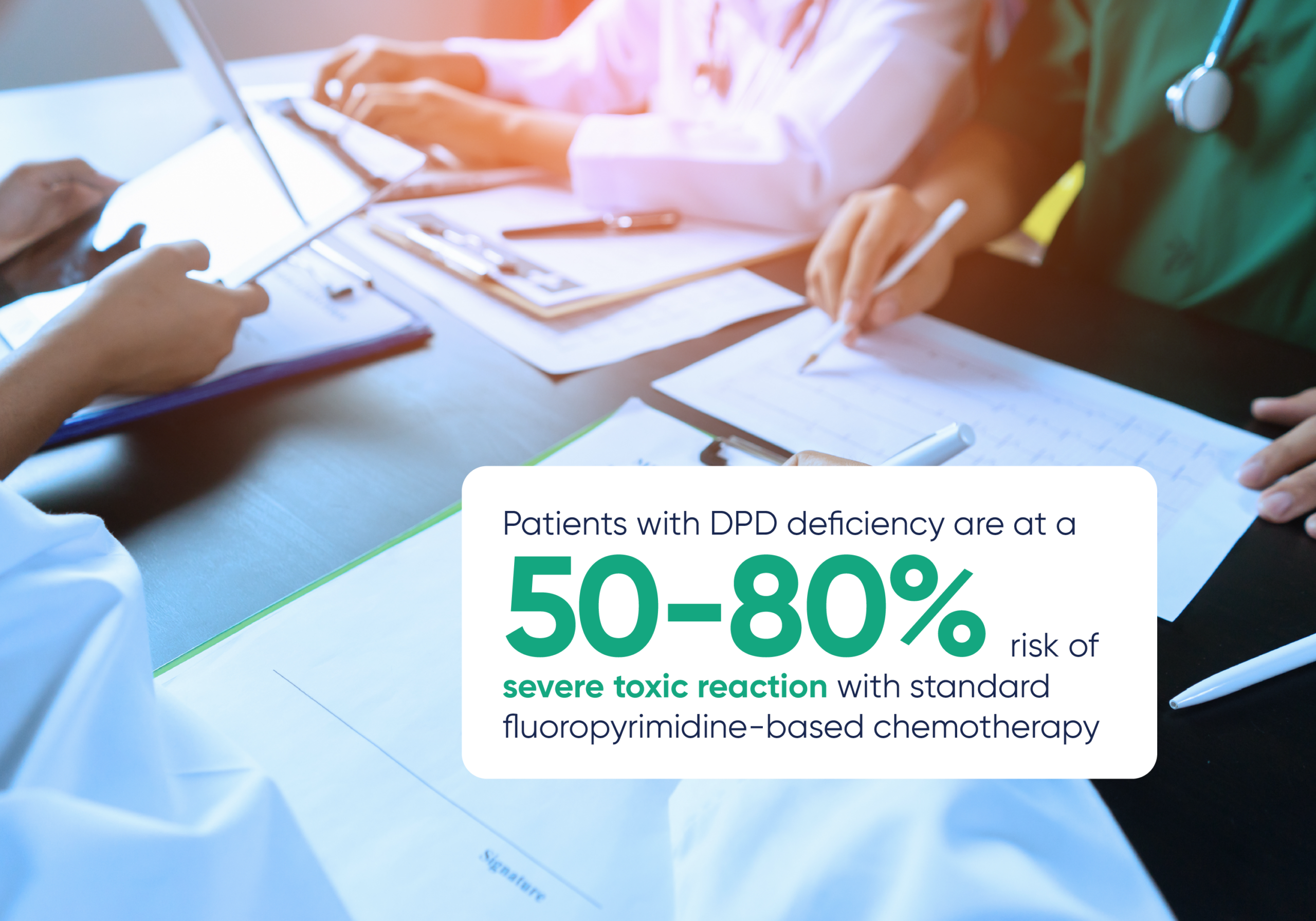
The FDA and NCCN Colon Cancer Guidelines now recommend that providers test patients for genetic variants of DPYD prior to initiating therapy with capecitabine (Xeloda®) or fluorouracil (5-FU®).
AccessDx Laboratory’s DPYD Test:
- Is a focused, single-gene test for DPD enzyme deficiency
- Provides actionable, high-evidence drug-gene interaction insights based on CPIC, FDA, and DPWG guidance
- Identifies clinically relevant DPYD variants associated with increased toxicity risk
- Supports informed discussions prior to initiating fluorouracil or capecitabine
- Provides singular prescribing guidance for oncology practices not managing complete medication regimens
FAQs
What is DPYD testing?
DPYD testing is a genetic test that looks for changes (variants) in the DPYD gene, which affects how the body breaks down certain chemotherapy medications called fluoropyrimidines — including capecitabine (Xeloda®) and fluorouracil (5-FU®).
The test helps identify patients who may be at increased risk for serious side effects from these medications.
Who should be considered for DPYD testing?
DPYD testing should be considered for patients who are planning to start:
- Capecitabine (Xeloda®)
- Fluorouracil (5-FU®)
These medications are commonly used to treat solid tumors such as:
- Anal cancer
- Breast cancer
- Colorectal cancer
- Pancreatic cancer
- Head and neck cancers
Why is DPYD testing important before starting capecitabine or fluorouracil?
Some patients have partial or complete DPD deficiency, meaning their bodies cannot properly metabolize these chemotherapy drugs.
When this happens, drug levels can build up in the body and lead to:
- Diarrhea
- Nausea
- Mucositis
- Neurotoxicity
- Neutropenia
- Hospitalization
- In rare cases, death
How is a sample collected?
A sample is collected by a painless buccal (cheek) swab.
How long does it take to receive results?
Results are usually available 7-10 days after the laboratory receives the sample and completed order, and will be available in the AccessDx Provider Portal.
Is single gene DPYD testing sufficient, or should multispecialty PGx testing be considered?
An oncology care plan augmented with multispecialty PGx insights enables the oncology team to optimize a patient’s comprehensive medication regimen, including anti-cancer and supportive medications and those for comorbidities, to optimize prescribing for each individual patient. Many common oncology supportive medications are impacted by a patient’s genetics, including medications for:
- Anxiety
- Cardiovascular disorders
- Depression
- Nausea
- Neurological symptoms
- Pain
A broader approach can provide lifetime clinical value beyond a single therapy decision.
Establishing individual unique PGx signatures with multispecialty PGx testing enables the ongoing utilization of test results a patient’s lifetime.
Does AccessDx offer multispecialty PGx testing that includes DPYD?
Yes! The AccessDx PGx Profile includes DPYD. Learn more about both multispecialty options by clicking here.
PGx in Oncology Resources
Government and Scientific Resources
AccessDx PGxperts™ Articles
- Journal of Clinical Pathways: Clinical Implications of the FDA’s Capecitabine Boxed Warning: Integrating DPYD Testing into Oncology Practice
- Healthcare Business Today: Pharmacogenomics in Oncology: Unlocking Value, Safety, and ROI for Healthcare Systems
- MedCity News, Drug-Gene Testing: Key to Safer Cancer Treatment
- Journal of Clinical Pathways, FDA Highlights Risks Associated With DPD Deficiency, Advises Testing Before Treatment
- Pharmaceutical Executive, Screening for DPD: Q&A with Kristine Ashcraft
- Journal of Clinical Pathways, “Implementing PGx Testing in Oncology: Best Practices, Barriers, and Benefits.”
- Journal of Clinical Pathways, “Recommendations for Standardizing DPYD Pharmacogenomic Testing.”

